
Asthma is one of the most common chronic conditions a child may live with, yet many parents feel lost in how to treat it. One in five children will experience asthma symptoms in their childhood, and those in urban Black families are at higher risk. Understanding what asthma is, how to care for it, and what steps families can take for early intervention can help children to lead full, active lives without limitations.
“Asthma is something we see every day in pediatrics,” says Dr. Stephen Schulman. “The good news is that when families understand what’s happening and how to manage it, kids can live very normal, active lives.”
What is Asthma?
Asthma is a chronic condition based in the lungs that makes it hard to breathe. Asthma occurs when the breathing tubes inside the lungs swell and tighten, restricting the flow of air inwards and outwards. This often occurs when the airways are irritated by triggers, which leads to them producing sticky, thick mucus.
“When the airways are irritated, three things happen,” explains Dr. Schulman. “The muscles tighten, the lining becomes inflamed, and mucus builds up. All three make it harder for air to move in and out.”
Common Symptoms Include
- Shortness of breath
- Wheezing
- Coughing
- Chest tightness
While wheezing is often associated with asthma, it is not always present.
“A lot of kids with asthma don’t wheeze at all,” says Dr. Schulman. “Instead, they have a persistent cough. That cough might seem mild, but it is often a sign of airway irritation.”
Asthma may be:
- Intermittent (symptoms come and go with triggers)
- Persistent (symptoms occur more regularly and require daily management)
Common triggers include allergies, exercise, smoke, infections, and air pollution.
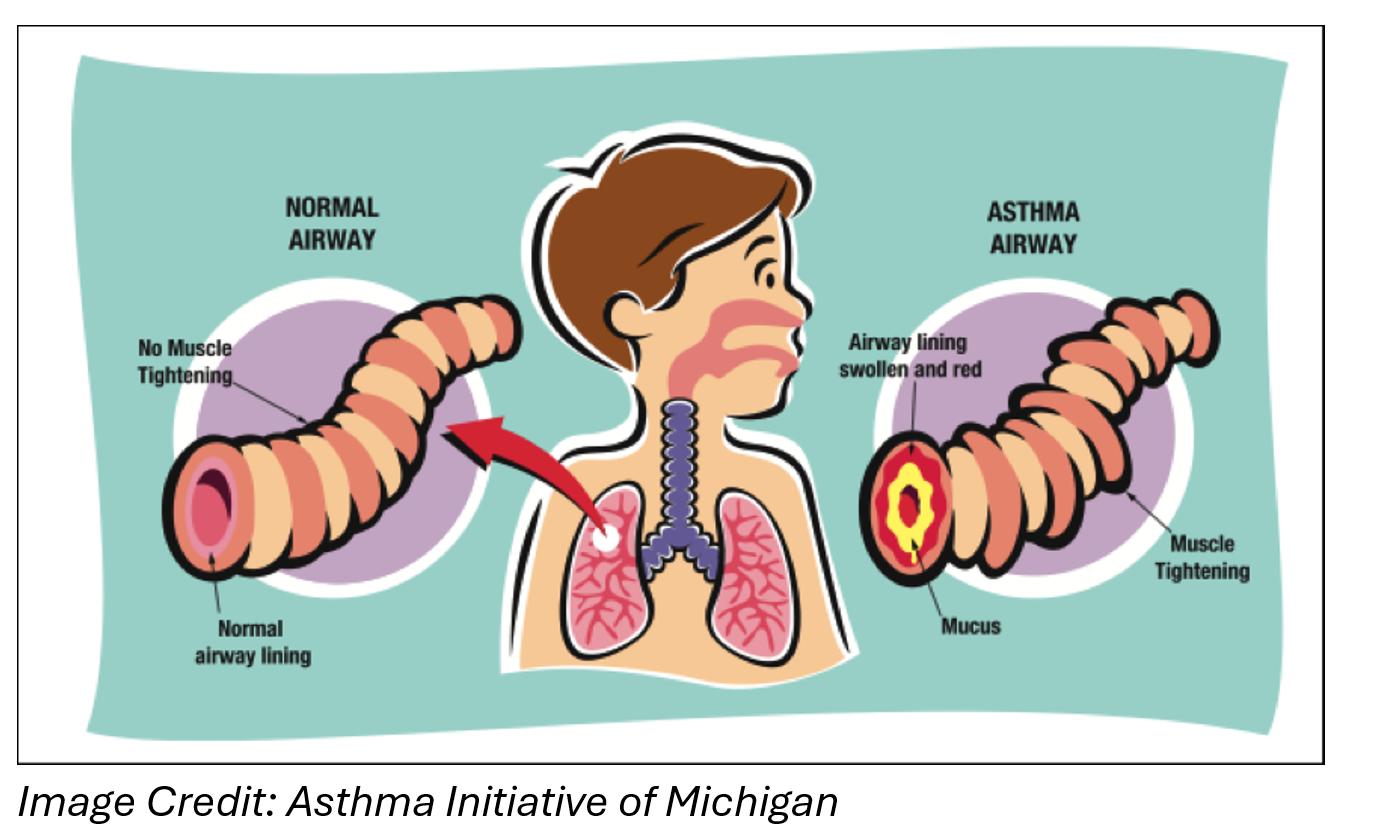
Image Credit: Asthma Initiative of Michigan
How do you treat asthma?
One of the first steps any caregiver should take for a child with asthma is to get them diagnosed. An allergist, pulmonologist or pediatrician can diagnose your child with asthma by performing lung function tests.
“We treat asthma by targeting each part of the problem,” says Dr. Schulman. “We relax the muscles, reduce inflammation, and help clear the mucus.”
After your diagnosis, you may be prescribed the following medications to manage your asthma.
- Maintenance inhalers to reduce inflammation
- Rescue inhalers (bronchodilators) to quickly open airways
- Oral steroids during flare-ups
- Nebulizers for younger children or more severe symptoms
For mucus, staying hydrated and using medications like Mucinex can help thin secretions.
“If your child is needing their rescue inhaler more than twice a week, that usually means their asthma is persistent and needs daily control medication,” Dr. Schulman notes.
For exercise, using a bronchodilator about 10 minutes before activity can help prevent symptoms.
How can I plan for asthma?
After diagnosis, families should work with their provider to create an asthma action plan. This helps you understand:
- What daily symptoms look like
- When to use each medication
- When to seek urgent care
“It’s really about giving families a clear plan,” says Dr. Schulman. “Once you know what to look for and what to do, it becomes much less overwhelming.”
Signs you should talk to a provider include:
- Wheezing
- A cough that wakes your child at night
- Coughing after exercise
- Severe or persistent coughing
Next Steps for My Child
The most encouraging news is that many children outgrow asthma as they get older.
“But early recognition is key,” Dr. Schulman emphasizes. “Asthma can be serious if it’s not treated, but with the right care, it’s very manageable.”
With proper treatment and support, children with asthma can live full, active lives without limitations.
If you think your child may have asthma, schedule an appointment
with a provider at Health Services of North Texas. Early care makes all the difference.